

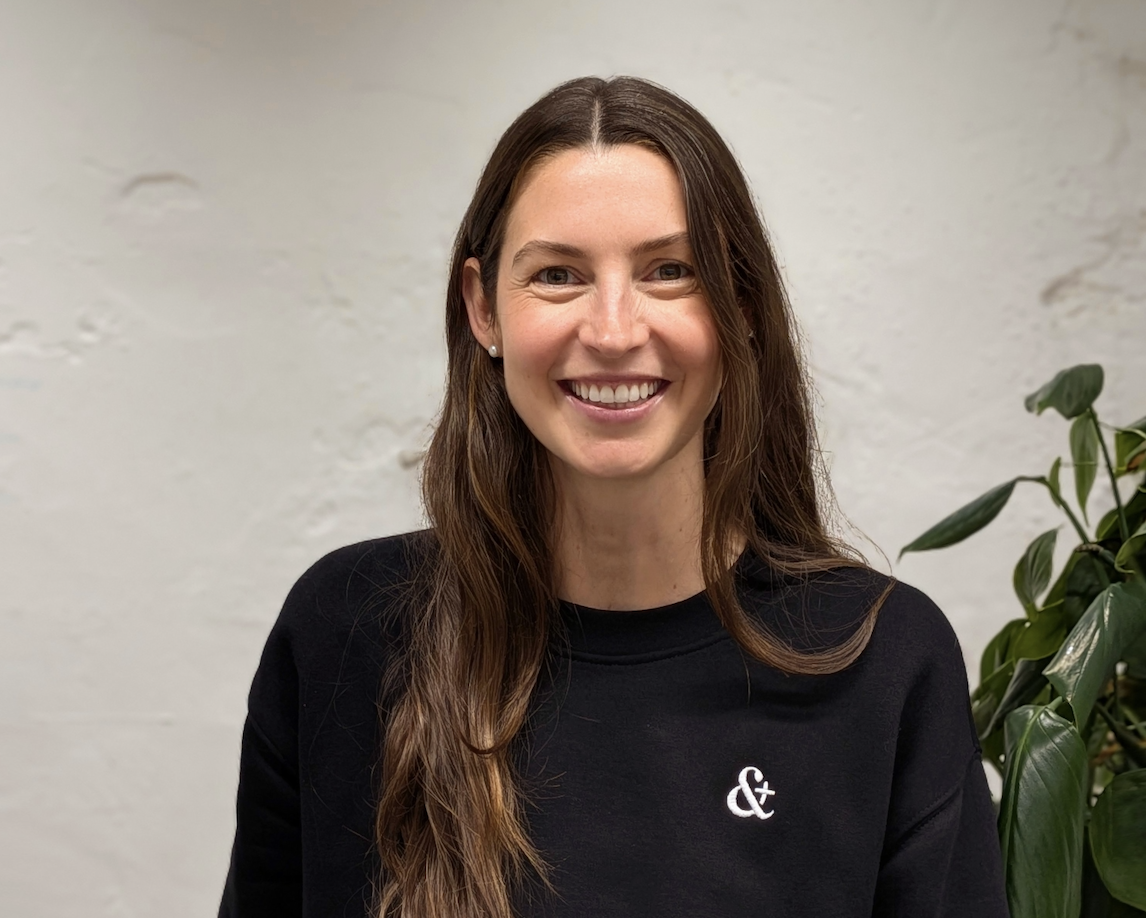
As Chief of Staff, Laura hires the incredible founders for our ventures. She then works closely with the founders and teams across people and operations, while also leading marketing for us. With experience spanning VC, startups, tech, talent, and scaling teams at companies including Google and Sydney-based VC Folklore Ventures, Laura brings a sharp eye for people, strong operational instinct, and a deep belief that great companies are built by great teams with the right foundations around them.
Your background spans recruitment, big tech, VC and now venture studio. What have been key learnings that you bring with you to your current role?
My career has consistently reinforced that the quality of a company is defined by its people, the problems they solve, and the need to work together with clarity in chaos.
My first career was in recruitment, which was trial by fire, but taught me that sales is built on relationships, understanding the problem, and solving it for the client. Working with hundreds of companies and people also shaped my view of the people and ingredients needed to build successfully.
This was my first experience (which turned into a love) of having an impact on others’ journeys and careers. One of my toughest clients was Google. I worked like crazy to turn the account around, and Google approached me for a recruitment ops lead role. Network is key!
At Google, we were an independent, scrappy, fast paced ops team. If we saw something broken, we’d fix it without waiting for permission from the powers above. It felt like running a startup inside a global tech giant. Prioritisation through chaos and taking teams on change journeys was key as I led a large team across APAC and worked across programs globally.
VC has been a great way to help build firm operations while supporting portfolio companies and working closely with founders from pre-seed to exit. After seeing what “good” looked like at Google, I learned how to scale it down for teams of two instead of thousands. Understanding how VC works has also helped me better support New+Improved companies through fundraising and investor relationships.
Now the work we do is even earlier. I call it the “minus days”, before we even have an idea, and we are working with potential founders to discover the problem and then hire them into founding roles.
Working closely with exceptional talent across my career has sharpened my understanding of great founders and teams. How they think, what drives them, and how to help them build. That said, I am still always learning of new ways of building through the incredible founders we get to work with!
What does your role look like at New+Improved?
My role spans new ventures, existing ventures and New+Improved itself.
I find our founders, a form of recruitment I had not done before, and a super unique privilege in helping build some of NZ’s fastest growing startups by hiring those who will lead them.
There is a lot to this beyond purely hiring. Currently we build 1-2 companies a year, and have a three-piece founder trio for each venture. Therefore, this is not high volume hiring but nurturing a small but very talented talent pool.
I then support founders once they join, helping them embed into the team and the company. I focus on understanding how each founder works best and how they operate together, so they can build strong alignment and become an effective, world class team from the outset. Next is helping founders find their founding teams and setting up some of their operational and people processes so they can focus on scaling fast.
My final bucket is leading New+Improved’s marketing and how we tell our story and build our brand externally. A lot of this is heroing the work we are doing, but most importantly the incredible work the companies’ teams are doing!
How critical are founders to the way you build ventures at New+Improved?
At the heart of it, we believe we can come up with a breakthrough idea, validate hard, and build a great initial product, but it is the founders who are going to build a successful company and take it through to exit. So, we place a huge amount of importance on finding the right founders! And especially finding founders who will suit the venture model, which I will explain.
What are the key technical aspects you look for when hiring founders for New+Improved’s ventures?
As you can imagine, this has many elements. At a high level, we look for a three-person founding team (typically a CEO, Chief Product Officer, and Chief Revenue Officer) who are technically strong and able to lead a company and team through the scrappy early stages and into meaningful growth. They’re founders, ex founders, or early stage operators with firsthand experience building functions and teams from the ground up.
We also look for B2B SaaS experience as selling to companies is very different from consumer markets which are driven by emotion, volume, and low(er) friction decisions. B2B involves longer, multi-stakeholder sales cycles and the need for clearer business cases. In this environment, founders sit between customer feedback and product development, staying close to the tech and making the trade offs needed to build something companies will actually pay for.
What about soft skills you look for?
Approach to leadership is key. The technical ability to do the role is a given, but building a company requires much more than that. The best founders can inspire people around a shared vision and bring others on the journey through the highs and the inevitable challenges. They set the tone for the culture, attract exceptional talent, earn the trust of customers and investors, and create an environment where people want to do their best work.
Comfort with ambiguity and bringing clarity to the team and company. On day one there is a working product, early traction, and initial operations, but the founders and team are very much building the plane as it is flying. Success, and therefore what we look for, requires thriving in that messiness, bringing in structure when needed and creating (and communicating) clarity amid huge opportunity, and potential distractions.
No ego and a keenness to get on the tools! I call this “no job too small mentality”. Everyone is on the tools and there has to be no ego and a genuine want to do this. As Josh Nuu-Steele, Co-Founder and CRO of Ideally, once told me: “At the beginning, all the founders are sales reps.” He’s since helped scale Ideally into the US while still staying close to customers and selling. This is true, as there is no one else. No matter the founder role, you are at the beginning, on the tools.
Ability to be challenged, and challenge. Founders need to be comfortable both challenging and being challenged. The best founders have strong conviction, but don't let anything get in the way of finding the best answer. They welcome different perspectives, ask hard questions, and are willing to change their minds when new information comes about. It is a balance of confidence and curiosity that becomes increasingly important as the company grows.
A bias for action. In a world where anyone can build, speed is a real advantage. With so much information and so many decisions each day, it is easy to overthink, intellectualise and get stuck. The best founders turn uncertainty into progress quickly and they ship, talk to customers, hire, and iterate before everything is fully defined. Momentum and learning speed matter far more than getting it right upfront. That said, having curiosity and intention behind your decision making is key.
If someone is reading this and thinks “that’s me!”, or they know someone who would be great, what should they do?
Hit me up! I am always keen to meet great B2B SaaS founders, operators, and builders and share more about what we are building at New+Improved and how we think about venture creation.
Even if you are not sure it is the right fit right now, or just want to learn more, I am always up for a chat. You can find me here or at laura@newandimproved.ventures.
What kind of founder thrives in a venture studio model based on what the model unlocks?
As Hannah mentioned in her interview of her own lived experience, founders who know how hard it is doing it alone thrive in the model. But so do early operators who have all the skills I have mentioned above, but do not have an idea, or do not have the desire, and sometimes confidence, to do it alone.
We also look for those who have a balance of a desire for collaboration and ownership.
Collaboration is essential, but founders need to see the studio as an enabling support system, not a crutch. Even with a product and early traction, there is still a long road ahead, and success comes from founders who want to build it together, while still owning the big, often tough decisions rather than depending on the studio to do the heavy lifting.
The desire to build something big. All the companies aim to be VC backed, and so the desire to build something legendary, at pace, is key!
What do founders underestimate most about working with each other?
Being co-founders is like any relationship, and relationships take time, energy and intentional investment to get right, and most importantly, to last.
That investment needs to start early. And we really focus on this in how we hire, onboard and support the early co-founder journey.
At the beginning of the founding journey, it is fun, exciting, everyone is mostly running in the same direction. If things are going well, you are hiring, you are building. But inevitably challenges will arrive, you will not always agree on the best path forward, and this is when the strength of the relationship matters most. Taking the time to understand how each other thinks, works, and responds under pressure makes those difficult conversations easier to navigate. It creates the trust needed to disagree, make hard decisions together, and leave the room still aligned and as friends, even after a tough debate.
Building this relationship does not take groundbreaking actions. Take an hour out a week to learn about each other’s journey, personal values, motivations, what gets them out of bed in the morning, what grinds their gears, their views on how aspects of the company are going. You would be surprised how many founders who have known each other for years can't answer those questions.
And then ensure any company decisions or frictions are dealt with head on. No avoidance. I always say honesty is the best policy and founders need to live by this, especially with each other.
In the ops space, what tends to break first as a startup starts to move faster?
Lots can break, and some things breaking is a good thing so you can reassess and rebuild for your stage! But what often breaks, and shouldn’t, are communication and clarity.
As teams grow, information naturally becomes more fragmented. Decisions are made in different rooms rather than over desks, priorities shift quickly, and the outcome is people start operating with different assumptions. This leads to confusion, duplicated work, slower execution, and frustration.
But this is curable, or ideally preventable.
And, the key is being intentional. I LOVE the word intentional when it comes to both people and ops building!
I also love giving practical insight. A few habits that make a big difference:
- Founders, leaders and managers are “Chief Repeating Officers”. They need to repeat priorities relentlessly. People are busy and context switches are constant. If something is important, it should be heard daily.
- Create clear ownership. Ambiguity around who owns a decision or outcome is one of the fastest ways to slow a company down and is a key trouble child of startup growth.
- Explain the "why", not just the "what". Tell the story! Give context! Teams make better decisions when they understand the reasoning behind priorities and trade offs.
- Make communication two way. Clarity is not just broadcasting information, it is creating opportunities for people to ask questions, challenge assumptions, and raise concerns.
- Create the best forums and operating cadence for sharing information for your company. Reassess this to ensure no meetings for meetings sake.
Do not bite off more than you can chew. I live by the phrase “Do a few things well, rather than a lot badly”, but you guessed it, do it with intention!
Anything on the people front?
Yes, culture can be the first thing to break. This is often down to the above. With a lack of comms and clarity comes a disjointed culture.
The culture that emerges in those early days is incredibly valuable. But it does not scale by accident, it needs to be intentionally reinforced and embedded. You also cannot expect the culture you have on day one to be the same culture you have at 100 people, but it is important to intentionally think about what you want to keep and embed this into how you operate from how you hire, onboard, celebrate success, scale, come together as a team.
How do you help founders stay focused when everything feels important?
In the early days, founders and early teams should be spending as much time as possible on product and customers. Their days and weeks can be bombarded with opportunities, ideas, introductions, requests, hiring decisions and operational issues.
I see my role as helping founders protect their time.
In the early stages, hiring can easily become a full time job on top of everything else they are trying to do, so I help with introductions and building out their processes. The company may have a Chief of Staff early, in which case we work together, but if not, I would help build these foundations.
I am now looking to build all the initial processes and resources in a playbook so they aren't (or we aren’t) creating everything from scratch each time round.
If you are thinking about scaling fast, I do recommend an experienced ops person as soon as the cash model allows!
What part of working with founders do you find most rewarding?
Seeing them hit milestones. The major ones are great, and the most important to work towards, but I do find the small ones very satisfying, and it is important to enjoy the journey as these in between times and successes are where you spend most of the time. The journey is where the company is actually built - hiring, with customers, iterating, seeing things unfold based on your work. If you don’t enjoy this, it can be felt by everyone.
What’s a skill you’ve had to intentionally lean into in this role?
Getting back on the marketing train and creating consistent content highlighting our narrative and driving our key strategies, which is fun and rewarding! But 1) the team is incredibly trusting (especially as they are marketing geniuses) and 2) Drumbeat has been a lifesaver. It is amazing to be able to be the first user of one of our products and see first hand the incredible impact on efficiency, time saved, and most importantly, impact! I am hands down Drumbeat’s biggest fan.
What’s the best piece of advice you have ever received?
One of the last things my grandmother ever told me was “never miss a sunset”. I have taken this with me as a metaphor for life, and jumping on opportunities, whether that being adventures, moving countries, career, or experiences with my incredible family, husband, stepson and dog, Sunny. And I also do love a sunset!
We hope you enjoyed learning more about what we look for in our founding teams and Laura herself. Connect with Laura here!
